7. Idea
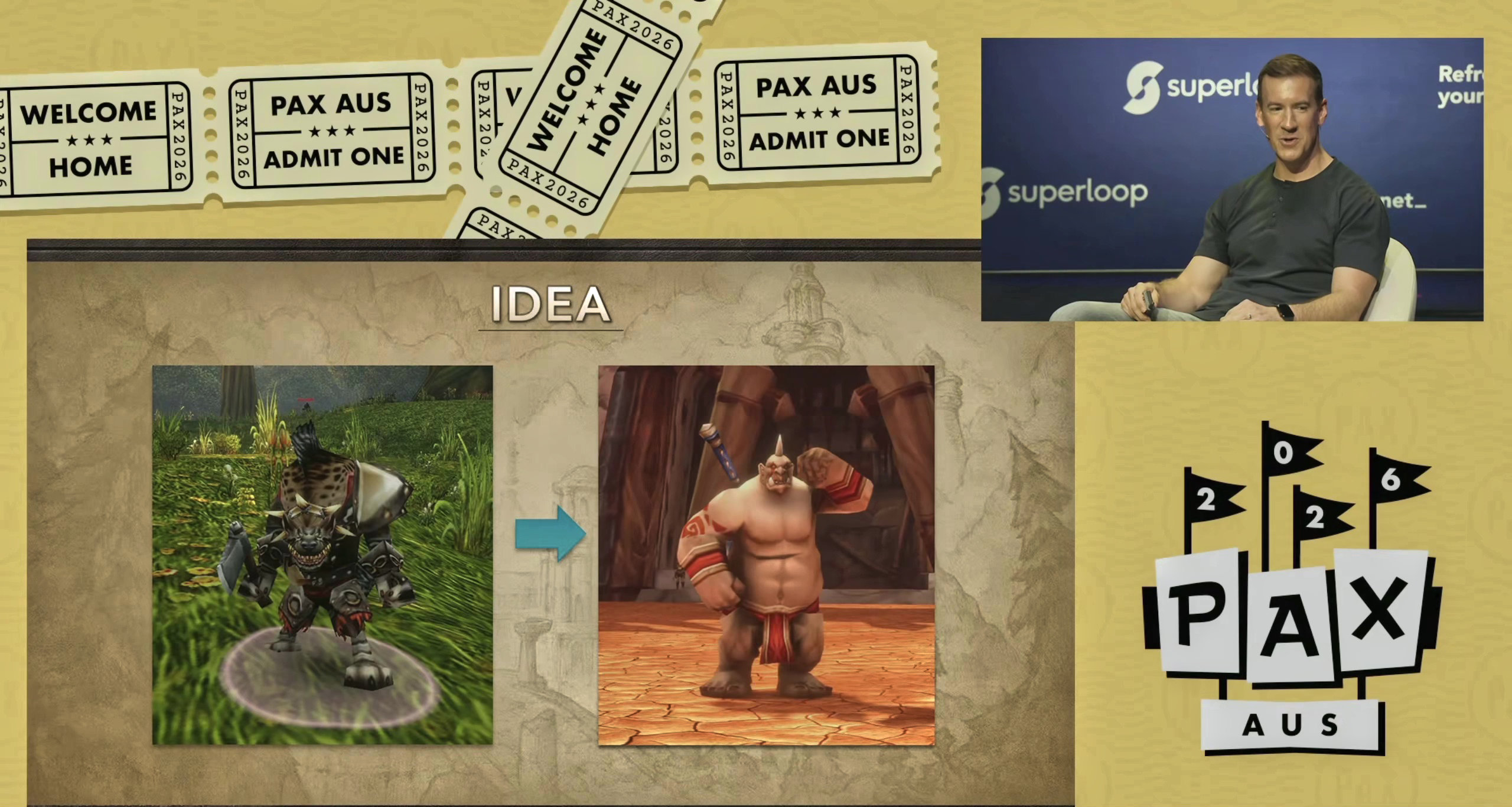
One of the things that they talked about was how we basically did a dungeon blitz. Like an idea blitz where we said, okay, we think we can build this many dungeons. Originally, I think we said we could build six dungeons. Spoiler alert: we ended up building nine.
We just had too many really good ideas. And this sort of was born out of that process, and from where we started from, this is a gnoll. It’s a creature that many classic players and World of Warcraft players are extremely familiar with. Gnolls are extremely vanilla WoW-coated. Let’s do a gnoll dungeon. That’s a great idea. And at first, we’re like, of course, that makes perfect sense. And then we realized we’ve kind of done a lot of gnoll stuff. Well, what else would be a creature that would make sense but also feels very vanilla WoW-coated? Of course, we said Ogres. Ogres make sense. Ogres would fit right in there.
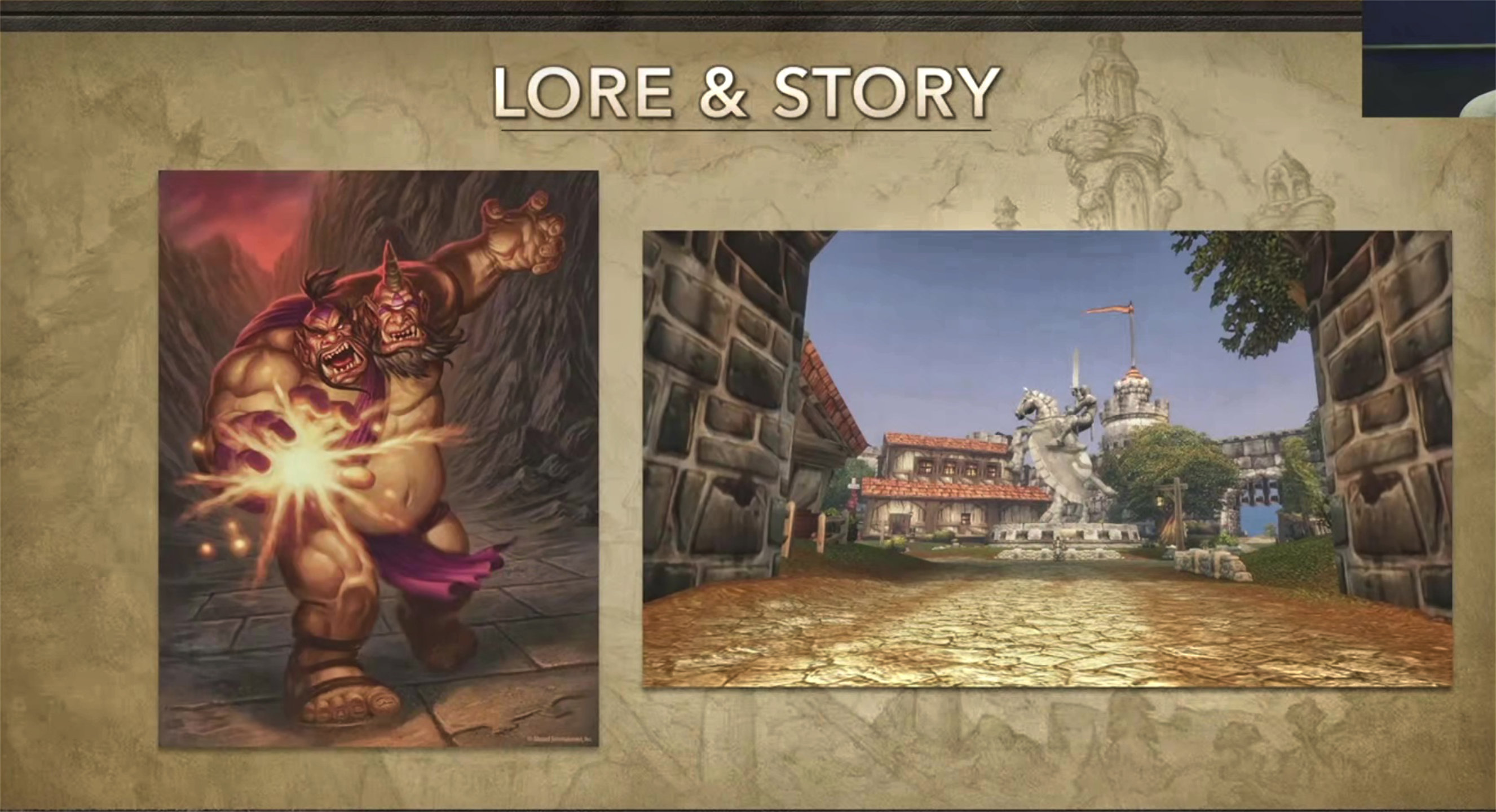
So then we said, okay, we are committing to doing an Ogre dungeon. And then we said, okay, we need lore; we need a story to back it up; we’ve got to make sure it fits in seamlessly. So, of course, one of the most famous ogres is this ogre named Cho’gall, the two-headed ogre that you see on the left up there. Cho’gall, of course, being an extremely closely tied to the Twilight’s Hammer and the Twilight’s Hammer involvement in the original wars that were showcased in the original Warcraft RTS games.
We said, okay, that’s perfect. Let’s do a Twilight’s Hammer-themed Ogre dungeon. And then it ended up fitting in seamlessly with the rest of the zone. There’s a faction located in there called the Brotherhood of the Horse from the Alliance, and I’m kind of going down a lore rabbit hole here.
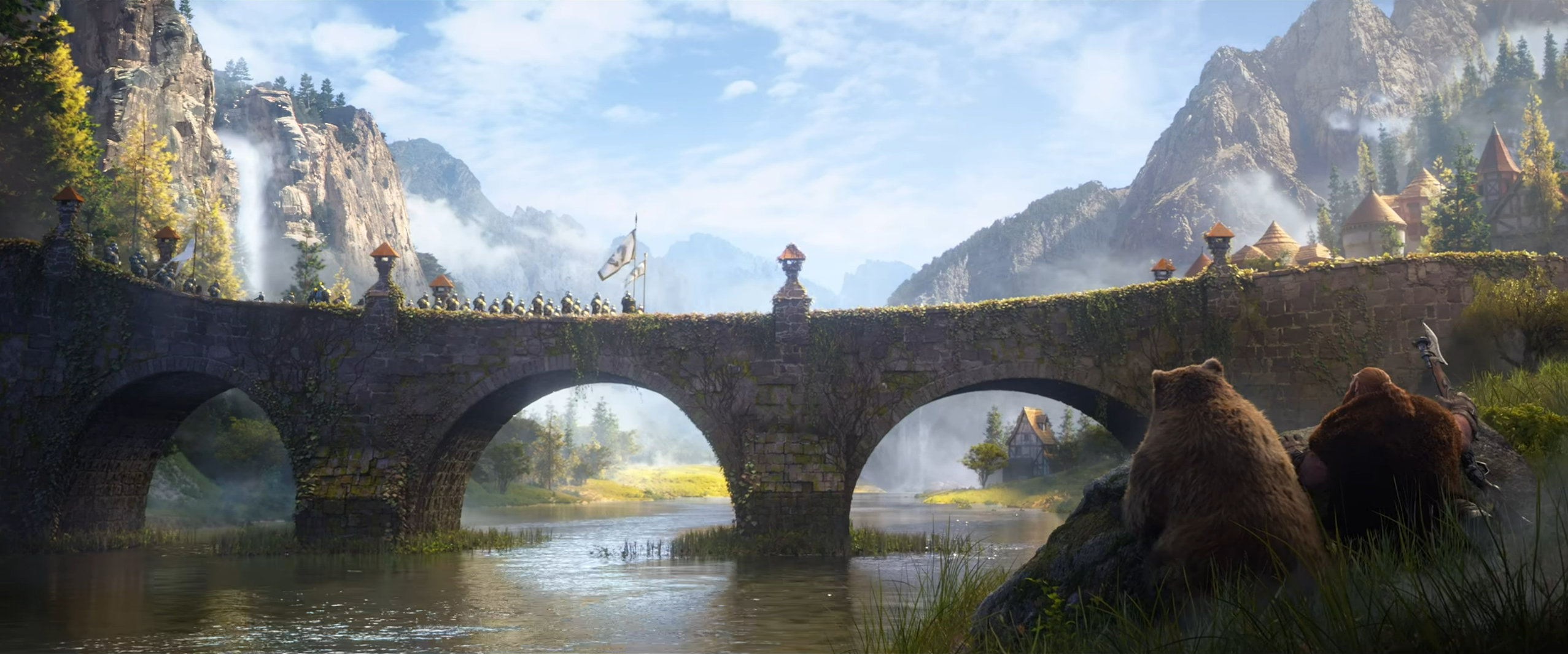
They’re from the original Warcraft RTS game as well, which fits in seamlessly. And if you’ve read the manual of the original Warcraft RTS game, you might learn a lot about them, too. For those who may not have noticed, by the way, when it comes to the Brotherhood of the Horse, in the opening cinematic that you showcased at BlizzCon for World of Warcraft: Forever, if you look very closely, you can actually notice their insignias on the army that’s marching over the bridge while the dwarf and bear are hiding. So take another look at that if you haven’t seen it. It’s been in there this whole time, these past few weeks.
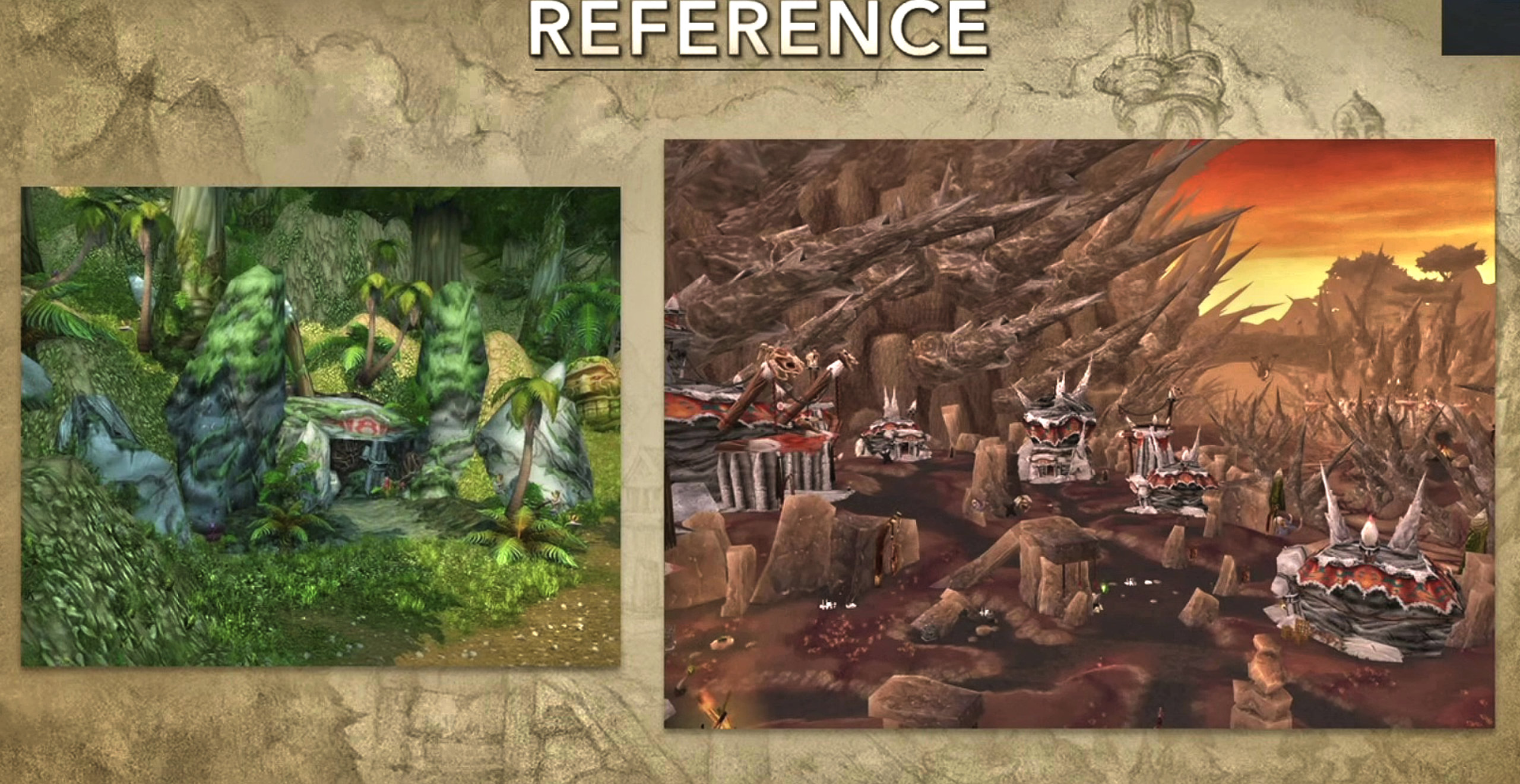
That’s the lore in the story. Then we say, okay, this is great. We wanna do an ogre dungeon. Perfect, this is awesome. What assets do we have to reference for what this thing’s gonna look like? In the original vanilla era, there’s not a lot of ogre structures. In fact, really the only thing that we had to look at was ogre mounds.
I believe in our creativity. I don’t know that we can make an amazing dungeon built out of ogre mounds. Although I’m sure we could figure out how to do it if we needed to. But luckily for us, just looking just a little bit beyond that, but still feeling like it fits in that classic space, was Blade’s Edge in TBC (The Burning Crusade) and that whole zone and that whole area. Lots of ogres in that area, so a lot more reference for us to be able to draw from when it came to their structures. So that’s wonderful.
Needs
Then we moved on to really our request list. This is an actual image from our JIRA. For those who don’t know what JIRA is, it is a project management software. This is the most interesting part of the presentation, I promise.
Holly Longdale: (laughs) Sorry, I love JIRA. It’s great.
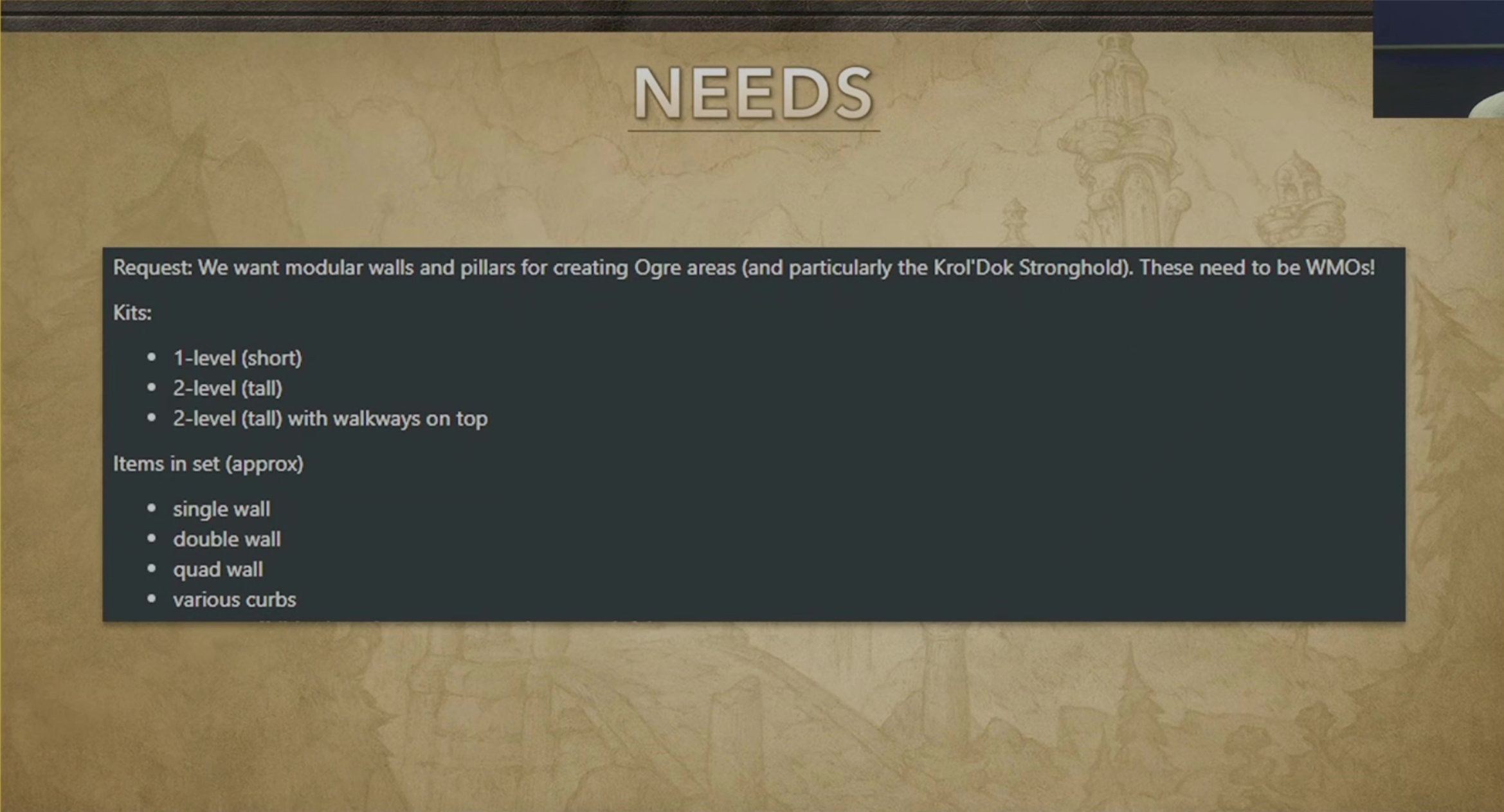
Clay Stone: We all do, we all do. But this is a screenshot of one of our request lists from within our JIRA that basically talk through what are the assets that we’re gonna need to actually build this thing. This is an important point, because this is when development really starts parallelizing, and you have each of these disciplines working on different things at the exact same time while all staying in sync with each other. Really cool stuff.
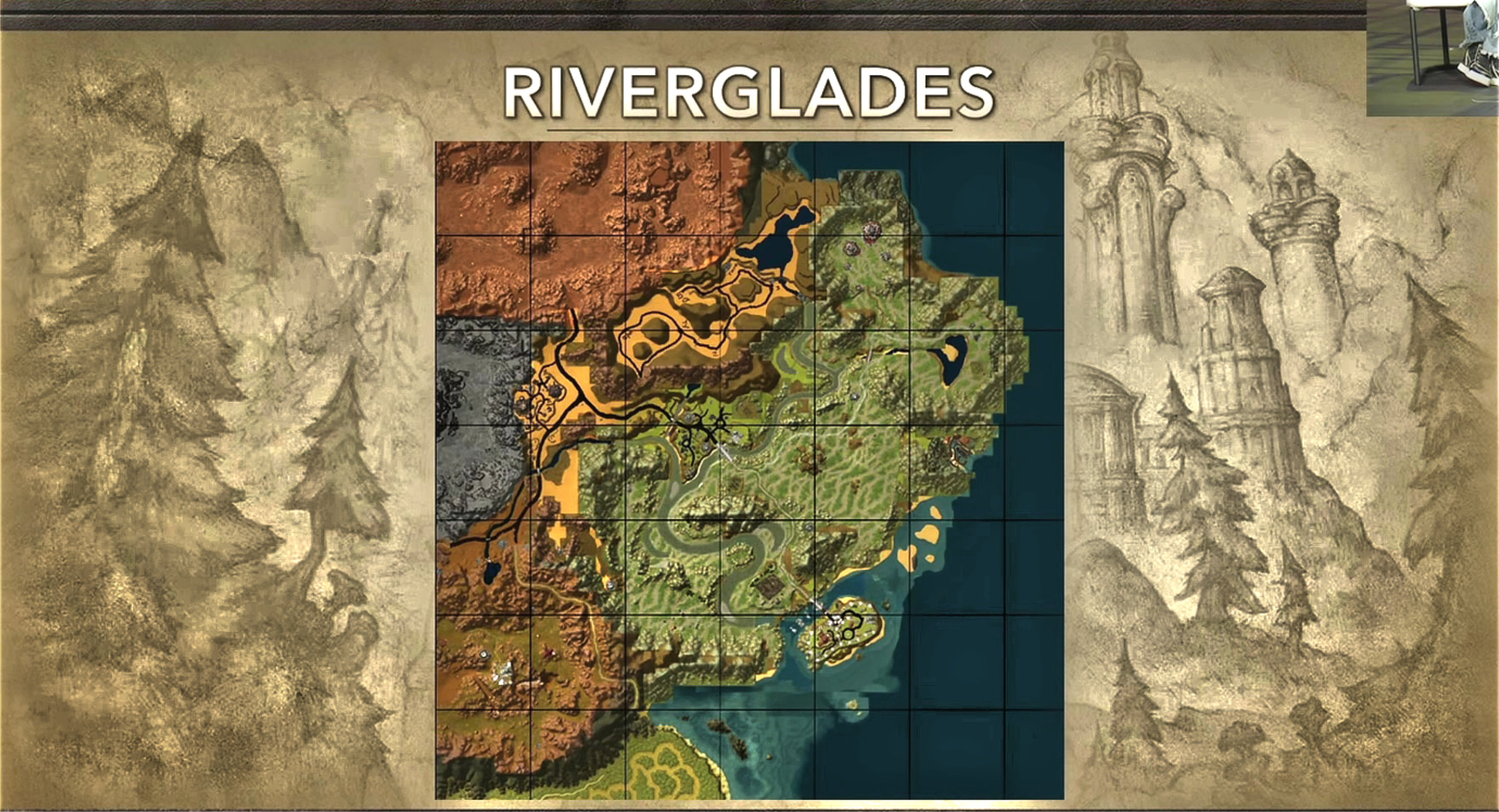
Going back to worldbuilding, this is a zoomed-in space of what that space looked like back in the original vanilla era, again from a space-eye-view.
Worldbuilding
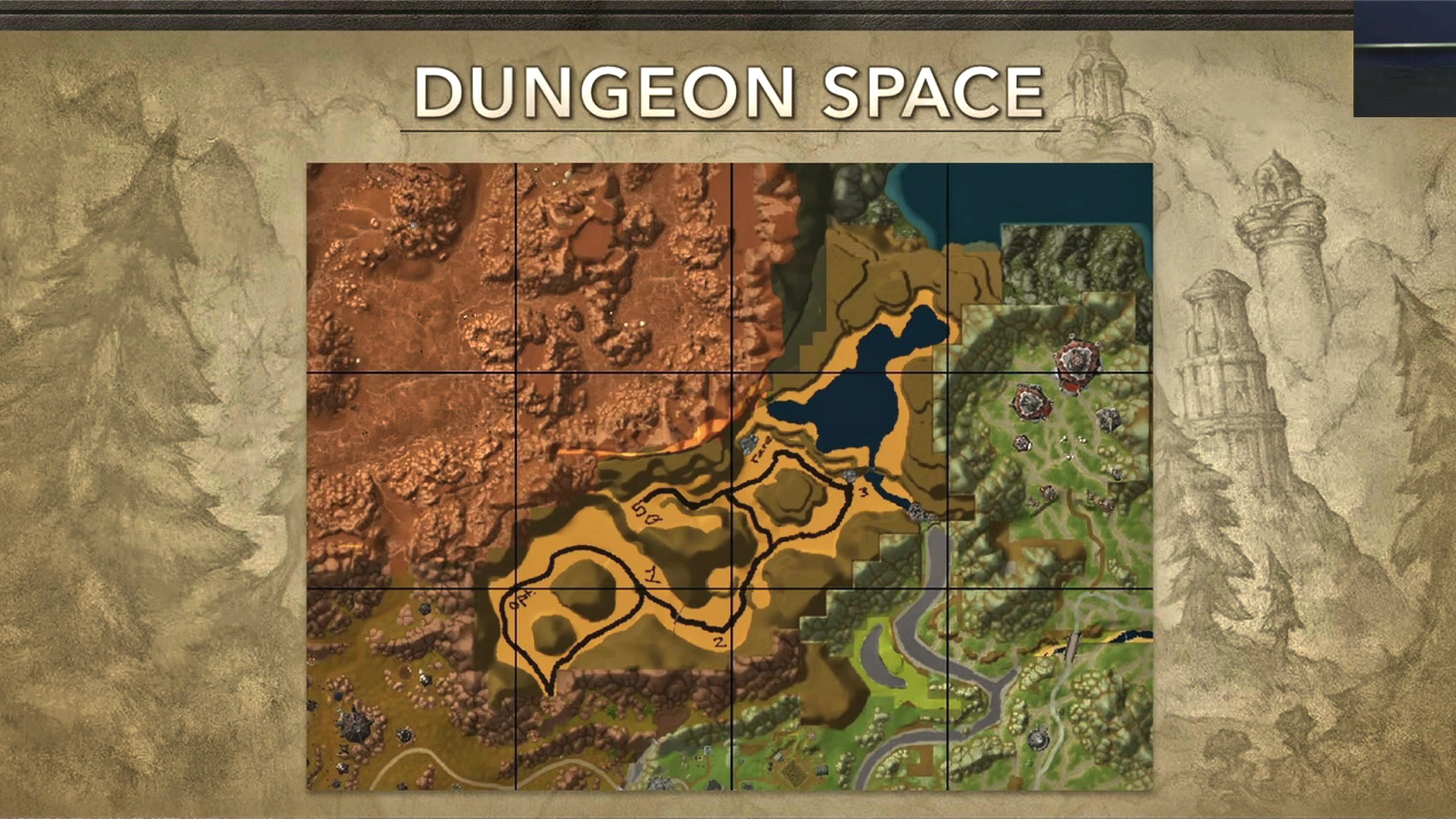
And then this is what that space looks like after our worldbuilders and our world artists really started working on it. You can see the whole space of the dungeon really painted in orange on there. And then I can zoom in a little bit more on it.
Player Pathing
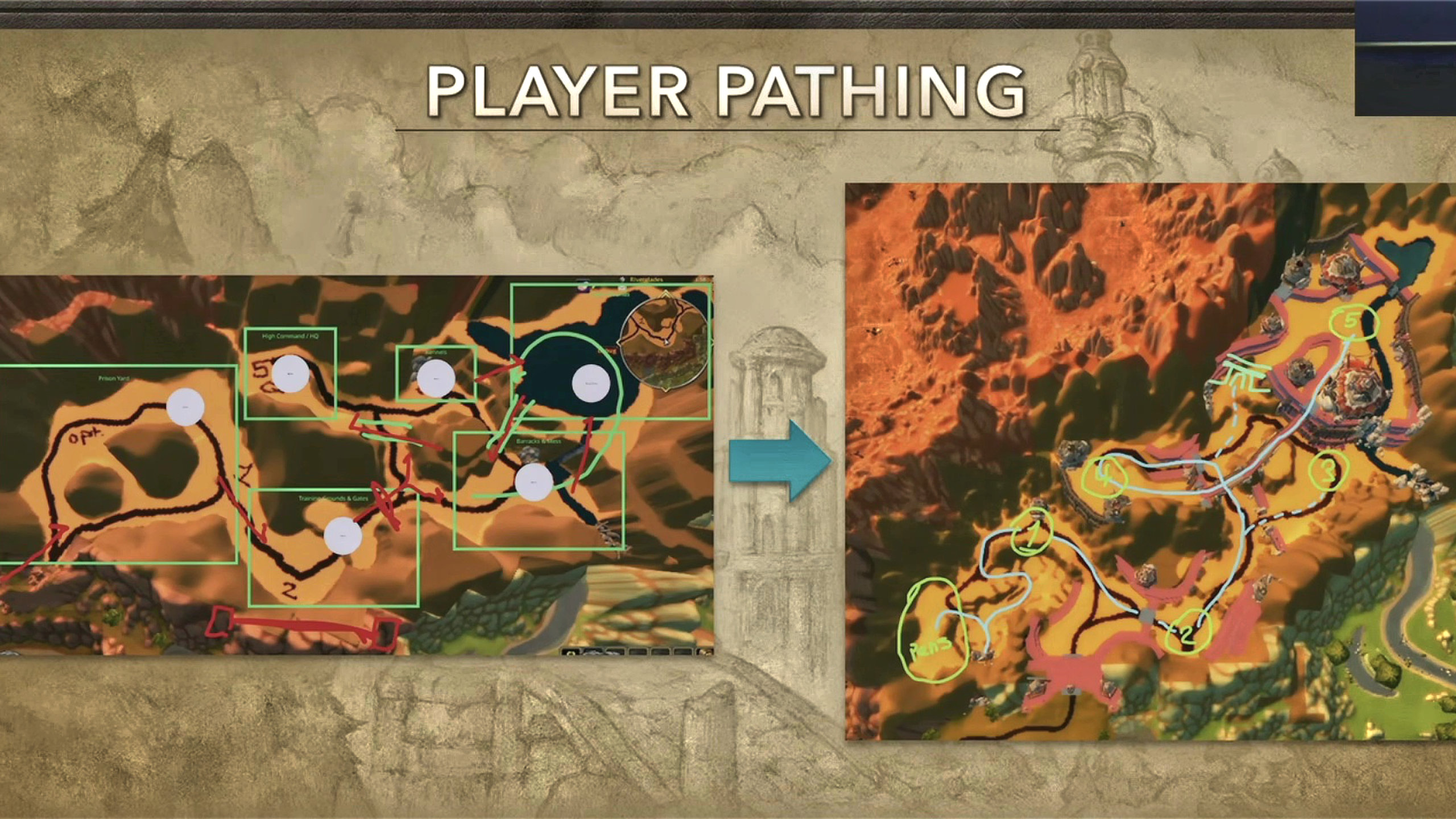
And then we talked about player pathing, and this is something that our encounters team works on a lot. We’re getting back to MS Paint artwork. We’re back at it. So you can see on here, those white circles on there are where we think our dungeon bosses are gonna be represented within the dungeon. And then we also number them. And you can see we draw black lines between them on what we think the player pathing is gonna be for all of this. And then the ordering that they’re likely going to encounter the different bosses.
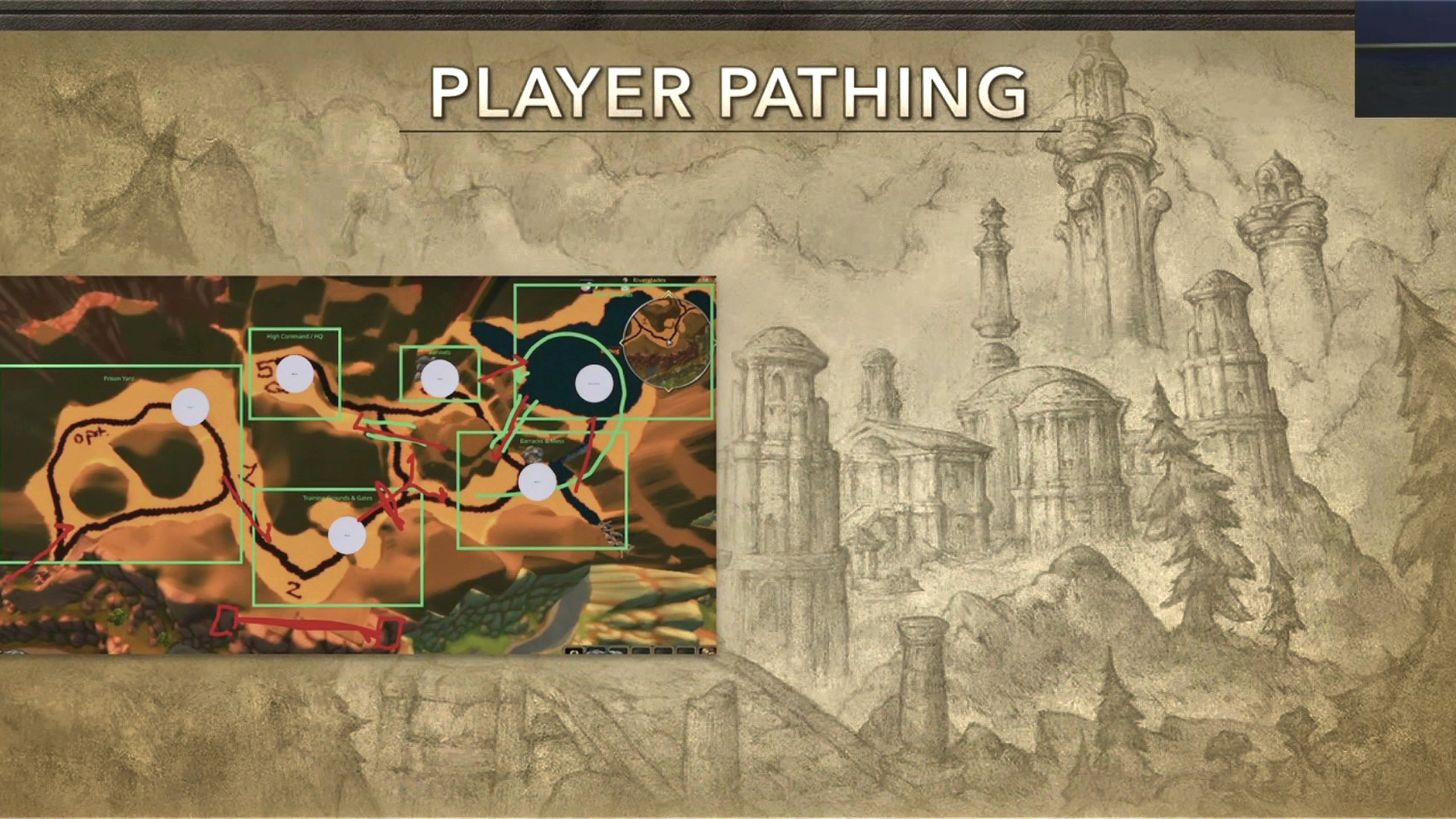
So we do that and we kind of play test it a little bit, and that’s when we realized, going through this, that we were gonna send players all the way up the hill, and then back down the hill. Turns out that’s not very exciting as far as progression is concerned in a dungeon. So we switched it up, and we said, okay, no, we are gonna go up the hill and end the dungeon at a really cool high point up there. So it’s one of those things that we figured out again through greater discussion and playtesting and things like that.
Blockouts
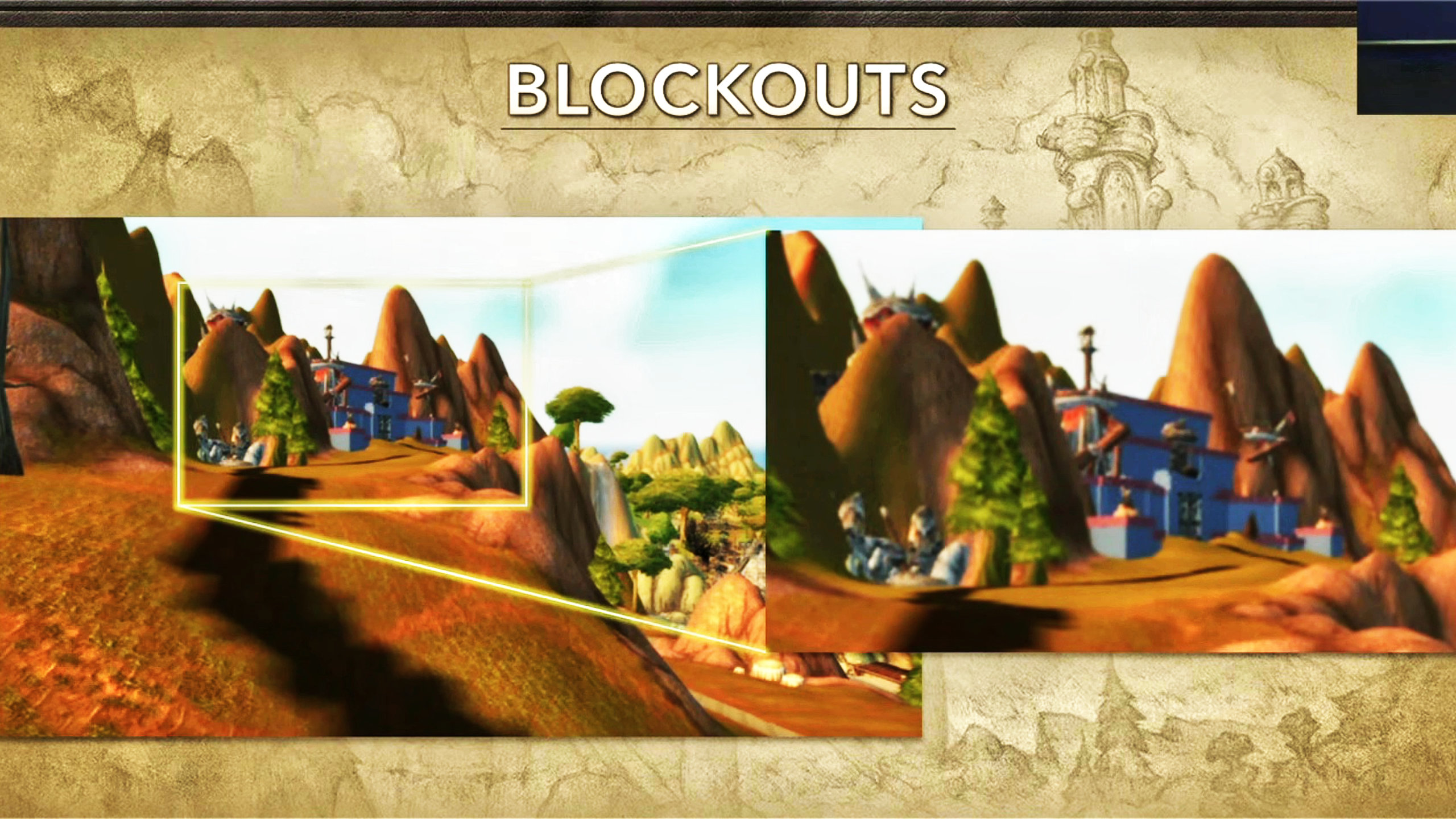
And then we get to the Blockout Phase. The Blockout Phase for our worldbuilders is when they really take simple geometric objects and put them into the game world to get a sense of size and scale, and also a little bit of an opportunity for players or our team to be able to use characters to run around the world. If I enhance this, you’ll see it is a very imposing-looking fortress up on this hill, which is really just a structure made out of geometric objects.
And then more blockouts from there. You can see what it looks like inside. I should note on this, though: I’m sure most folks thought that from the space-eye view that we had just used MS Paint art to paint orange. No, we actually painted the ground orange and painted those black lines on the ground when we’re actually developing it.
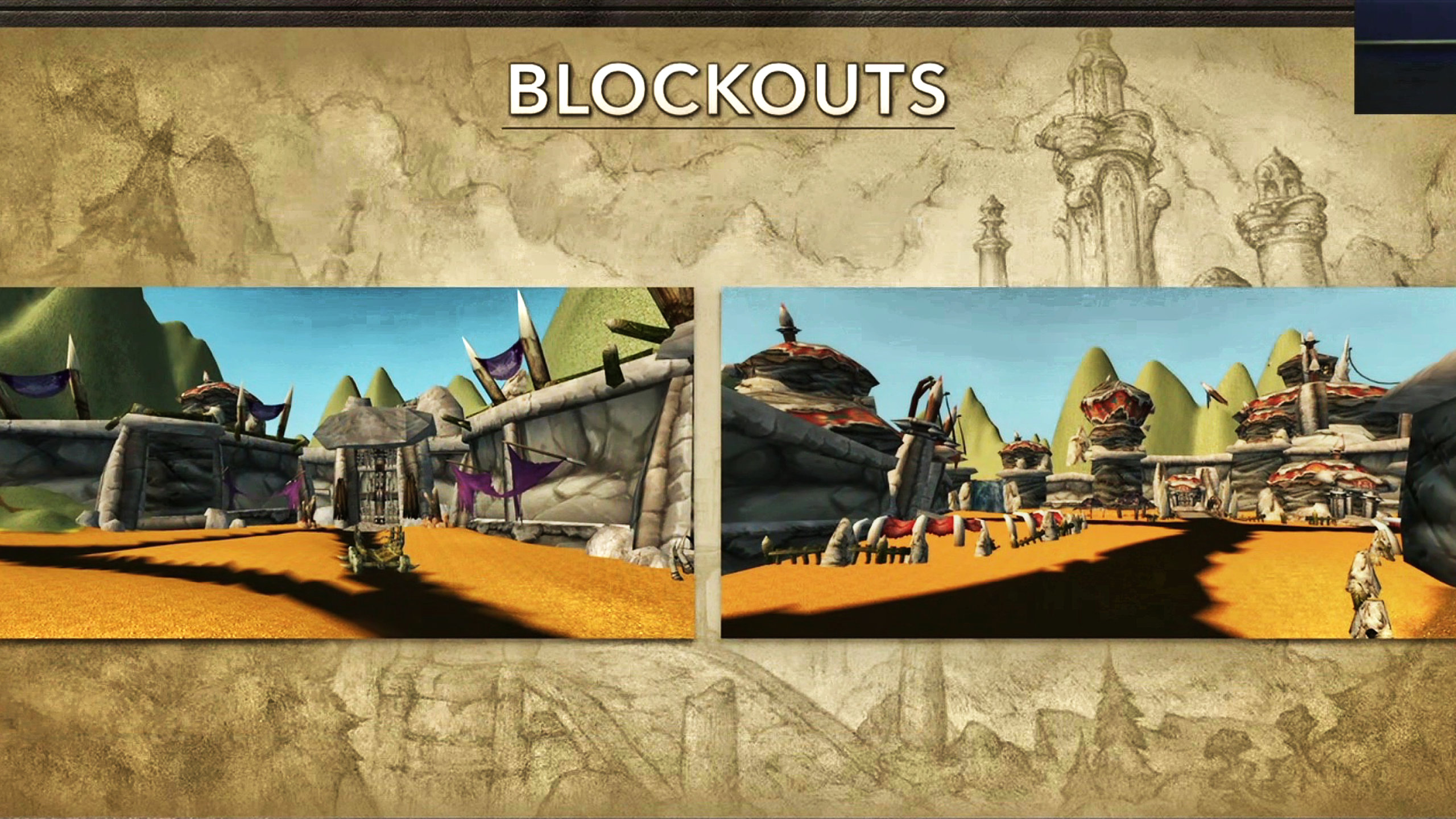
Holly Longdale: I do love, though, like for our team, when we do blockouts, normally it’s just in grayscale, like just literally putting — Our team cannot do that. Well, just put some trees, and it’ll be pretty. And I love that about them because they sell us a little bit on the vision. We can’t just do gameplay. We have to be in there.
| NAVIGATE - PAX AUSTRALIA 2026 - WORLD OF WARCRAFT: FOREVER KEYNOTE TRANSCRIPT | ||||
| 1. Intro | 2. Classic Releases | 3. WoW Mythos | 4. Dev Pillars | 5. Content |
| 6. Riverglades | 7. Idea | 8. Enemies | ||