Over a couple of decades, World of Warcraft fans have experienced quests and book lore about the Light and Shadow with interest. However, Shadowlands and the Chronicle books introduced concepts that put us at odds with the original source material about the Light and Shadow.
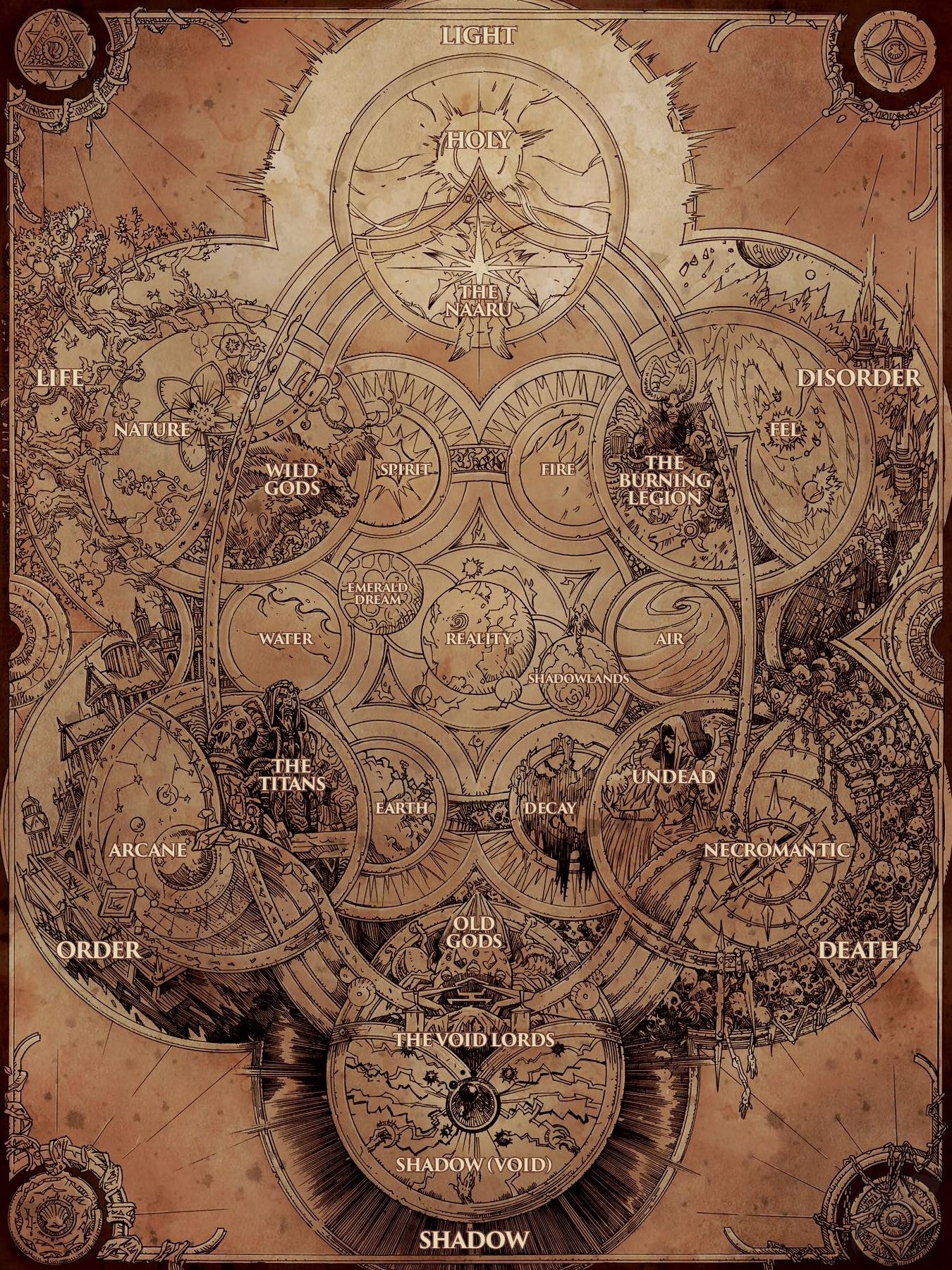
The Warcraft Chronicle book introduced the concept of a Cosmology or Cosmic Forces.
In Burning Crusade, we finally saw beings of the Light — A’dal and his Naaru kin. We learned of the Army of the Light to which Khadgar served for some time. We got a good chunk of lore on the Naaru from Christie Golden’s World of Warcraft: Rise of the Horde. How the Naaru came to Argus and spirited away those who one they renamed themselves the Draenei.
The Light was benign and kind. All in all.
In World of Warcraft: Legion, X’era attempted to coerce Illidan into shedding his fel scars to force him to become the prophesied savior, taking away his will. That shook the community as a whole, pulverizing canon. X’era, a being of the Light, was evil. Manipulative. This action taught us that the Light blinds people and takes away their free will.
Things started to change drastically in Battle for Azeroth (2018) when the Mag’har allied race was introduced. If you haven’t unlocked that Allied Race, this might sound spoiler-ish to you. That is where the Light began to be portrayed no longer as an all-good force. After we left Draenor, in Warlords of Draenor, Yrel’s faith in the Light turned to Zealotry. A fanatic of the Light that sought to eradicate the Mag’har. That Allied Race story didn’t make sense. That didn’t feel like the same Yrel we met in Warlords of Draenor. Yrel changed too drastically as if blinded by the Light. Did the Light alter her free will to wipe out the orcs? Or was there another factor the developers never explained?
World of Warcraft: Midnight doubled down. Arator annihilated many voidwalkers when rage overwhelmed him, burning himself with holy fire in the process. This was a wake-up call for Arator. Later, at the end of the Eversong Forest campaign, Turalyon charged at a troll and struck Arator instead when he interceded. Arator saw the same fanatic rage in his father’s eyes as the one that burned him. The point is that the Light is no longer seen as an all-good force, but one that manipulates. One that removes the will from its bearer for some nefarious and obscure reason. One could say the Naaru are more of a parasitic race that tendrils its way into people’s minds, and slowly takes them over, causing wars that normally could be settled with diplomacy. Wars cause multiple deaths. Are the Naaru consuming those souls? Is that their endgame?
World of Warcraft: The War Within has slightly retconned the Shadowlands. According to Sylvanas, she suspects the Shadowlands is too orderly and familiar. Basically, hinting that the Titans either created Shadowlands or modified it ages ago.
We know that Light and Shadow are two sides of the same coin. When a Naaru reaches its cycle, it transforms into a being of the Void. When a being of the Void reaches its cycle, it transforms into a Naaru. We learned this in the Burning Crusade expansion.
In Voidstorm, we learned something new, though.
Yea, we have heard Voidwalkers are spirits — but we didn’t know it was quitely literal. Xal’atath revealed to King Salhaadar that she was once a mortal. A little girl of a unknown race. Even in the War Within’s K’aresh animated intro — we got the breadcrumbs of this notion. That void creature Alleria and Locuswalker killed was formerly his lover. The Void transforms living beings into voidwalkers and other void creatures.
So it is logical that the Light also manipulates people, and transforms them. But not only people. We see what it does to the Rutaani and to the fauna and flora of Eversong Woods. It makes you wonder. Are there other stages of transformation that we haven’t seen that compares to a voidwalker? Well, we have seen those. Remember A’dal and Khadgar’s Lightwalker?
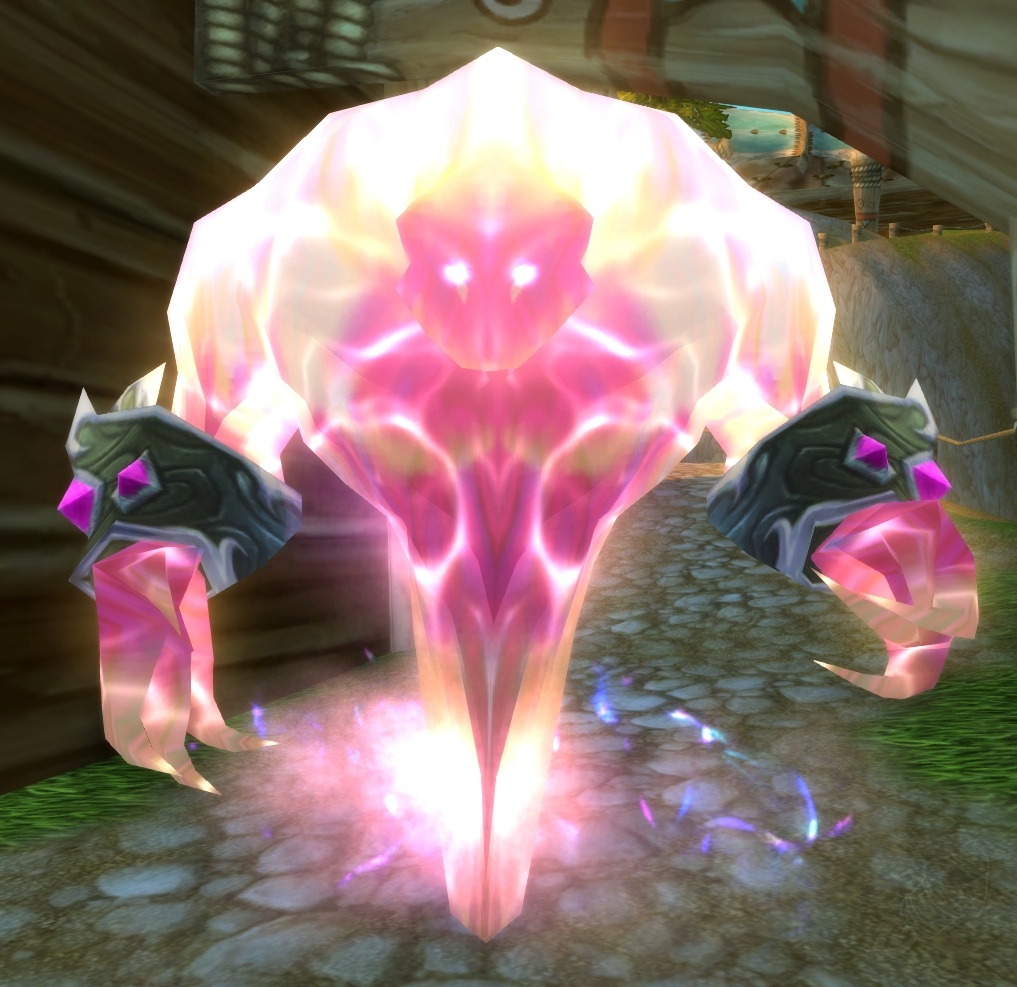
Was that Lightwalker formerly the spirit of a Draenei? An Orc? A Xal’atath? A K’areshi? Transformed by the naaru against its will?
To me, the creative writer responsible for this new lore killed the sense of an all-good Light. I don’t know if that was the full intention. But for lack of an all-good faction showing up to help us battle the chaotic or evil good that X’era and this new M’uru state represent — I have to say the Light lore has been ruined. This feels like the work of a writer who is an atheist reinterpreting what he/she thinks of Christianity and channeling it into the Warcraft lore — not knowing or caring that it might cause irreparable damage to a portion of the subscribership. Maybe I am wrong, and this wasn’t an atheist hell-bent (pun?) on pwning the Christians. But the fact that this new retconned lore continues to be doubled down through many expansions tells me something is wrong. No one is correcting course.
Shadowlands proved to be a colossal mistake. Portraying the Light as an evil, manipulative force is a mistake. This can easily be fixed in Midnight if there are factions within the Light, and factions within the Void — affected by a third party … such as the Nathrezim. The quicker the creative team fixes this mistake, the better.
On another note, there is something that hasn’t been fully explained in the Light lore.
When Paladins die, one thinks they ascend to join the Light. But Uther was in the Shadowlands, sent to Bastion. In the case of Uther, his soul was trapped inside Frostmourne. I’m not sure if it was explained in-game, but I assume when Arthas was defeated, and Tirion Fordring shattered Frostmourne, those souls moved on to the Shadowlands — and that’s how Uther’s soul ended up there. What prevented Uther’s soul from being claimed by the Light (becoming a servant of the naaru in their plane).
More questions: Whenever a Paladin dies, their corpse is taken to the Light’s Hope mausoleum. But… this is the second instance (now in World of Warcraft: Midnight) where two Paladins die, and their corpses disintegrate in holy flames, and their spirits ascend skybound in the Voidstorm quest titled “Bury Me Not.” Here’s the example:
In that quest, Callum Ashvow, a paladin, is the puppet of a Dominaar named Imperia. When we defeat Callum, in his last breath he turns around and infuses the chains with the Light, burning Imperia but also dying to the holy flames himself. Callum says: “Thank you… Anais… I’ll find you in the Light…”
Moments later, the high elf Knight Anais also dies: “My parents always said falling in love with a human would end in heartbreak. There’s never enough time, is there? Cal…? I’m so tired. Let’s go home.”
Knight Anais’ body disintegrates in holy flame. Then the player can see two spirits floating skybound. Anais and Callum.
So… what’s going on here? Some paladins die, and their corpses are buried in Light’s Hope. Other paladins die and turn into a flame of holy fire. Is it because they are in Voidstorm (not in Azeroth)? Did that happen because both were fatally struck by a Void creature?
Come to think of it, when a Void Elf dies in Voidstorm, their body also disintegrates into a shadowy dust. No corpse.